
Karin Zitzewitz, "The Sound of Resistance, or Asking Historical Questions of Contemporary (Indian) Art," forthcoming in Art Journal (Fall 2026).
ANTHROFUTURE Senior Researcher Karin Zitzewitz was in residence in the Department of Fine Arts at the Indus Valley School of Art and Architecture in Karachi, Pakistan, in January 2026. For the first two weeks of their last year in the BFA program, fine arts students worked with Zitzewitz on the concept of "worldmaking" to imagine the future. Given IVS's unique engagement with the city of Karachi, many of the students chose to imagine how the city might be transformed by technological or ecological changes, while others looked closely at their own personal futures. Zitzewitz conducted group ideation sessions and individual tutorials with the students, before a final critique in which participating students presented their work. Students at Indus Valley School take advantage of both on-site studios and site visits in Karachi, including work with craftspeople and conversations with Karachiites about their everyday lives.
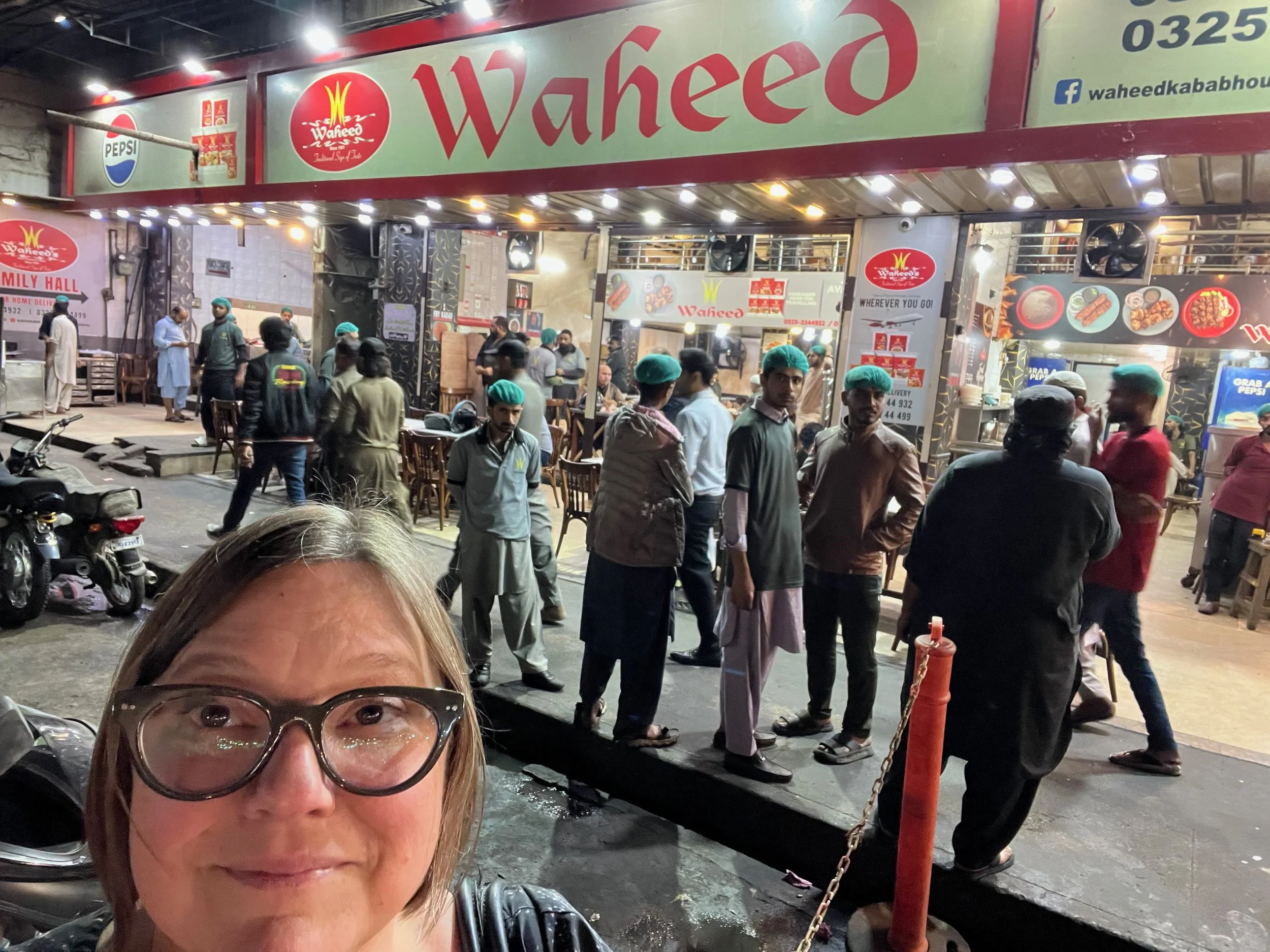
The scene outside of Waheed Kabab House, one of Karachi's best places for street food.
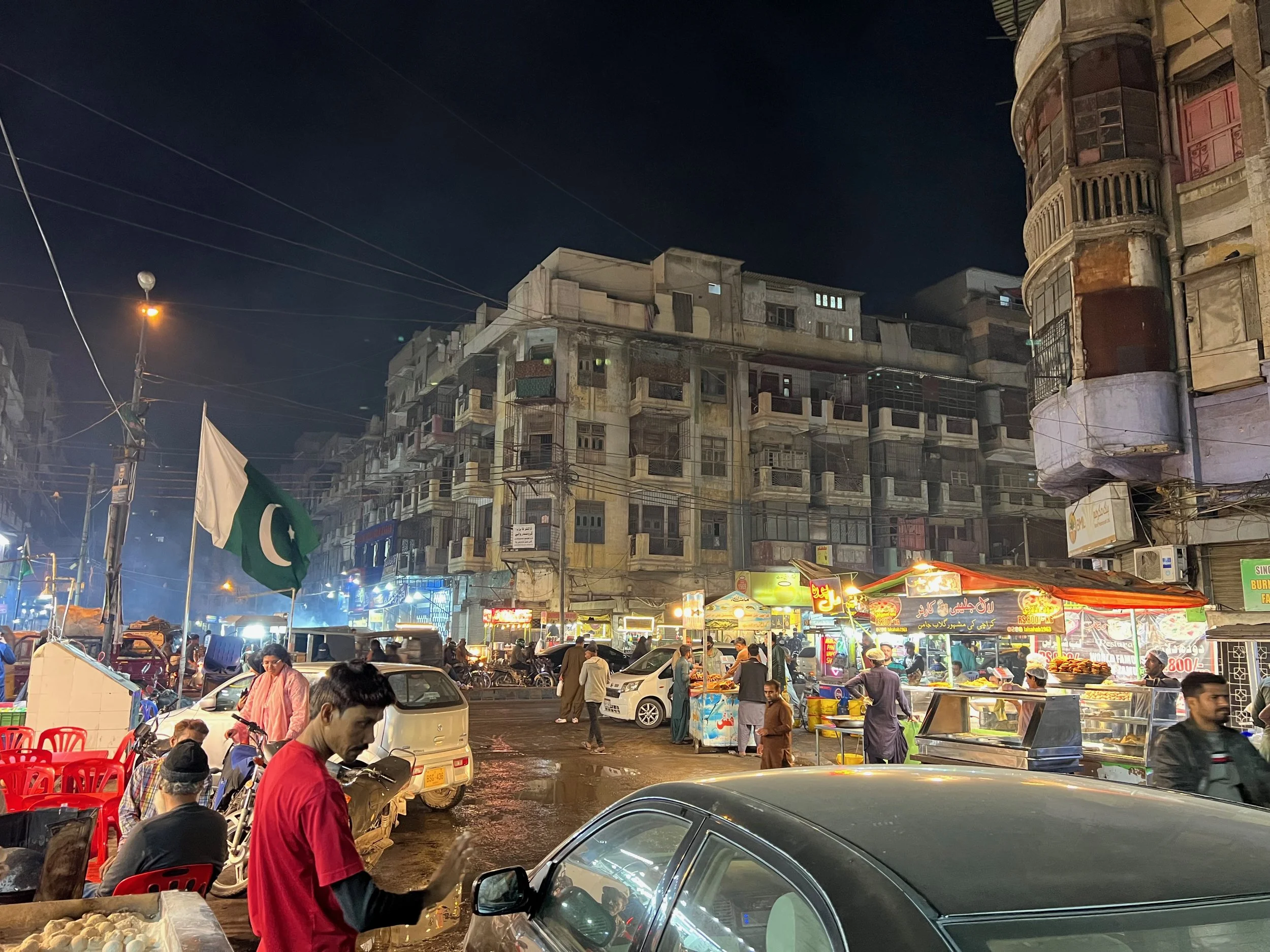
Burns Road, Karachi, outside of Waheed Kabab House.
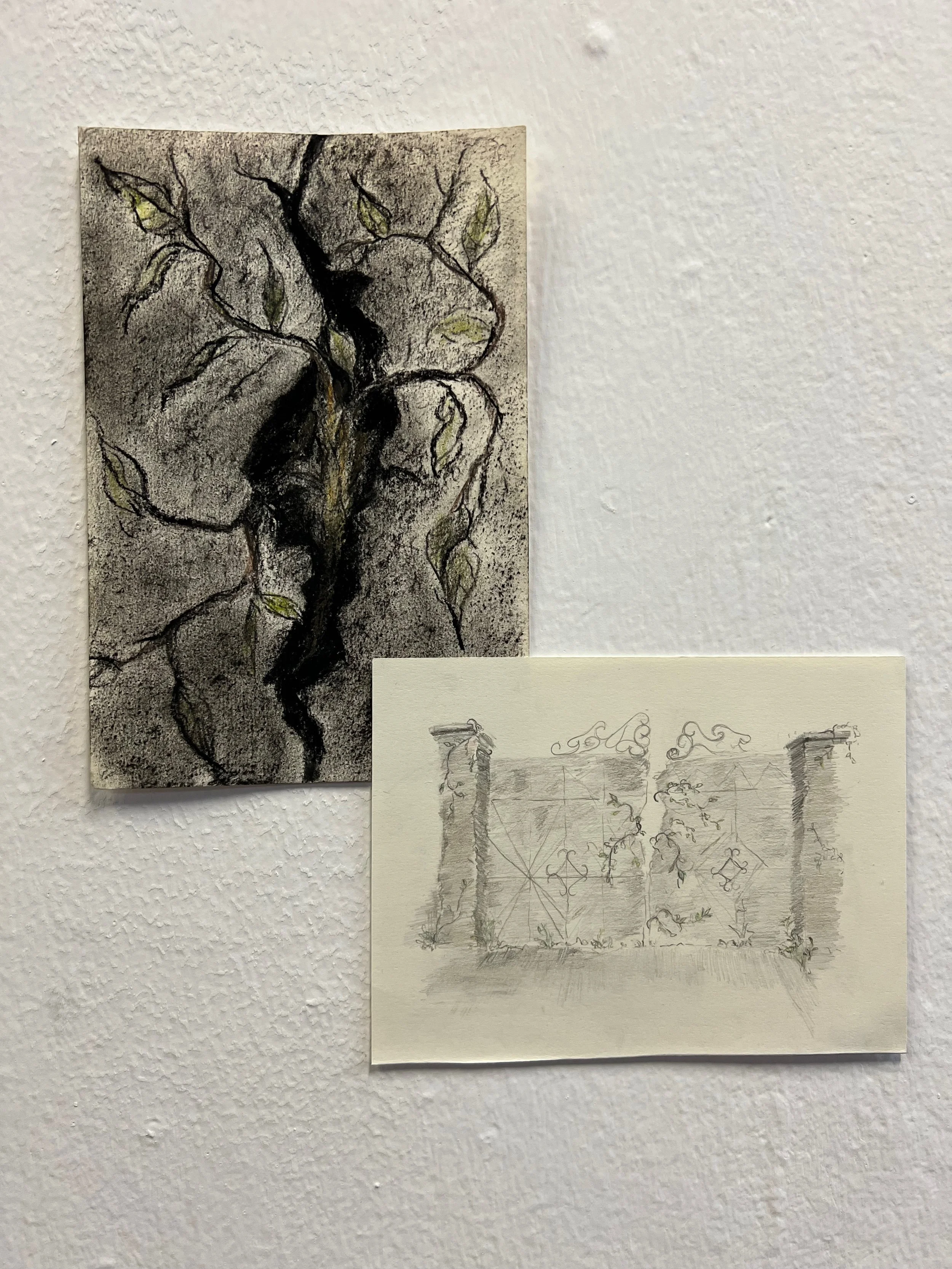
Barika Yousefi's preliminary drawings explored how plants take over architecture.
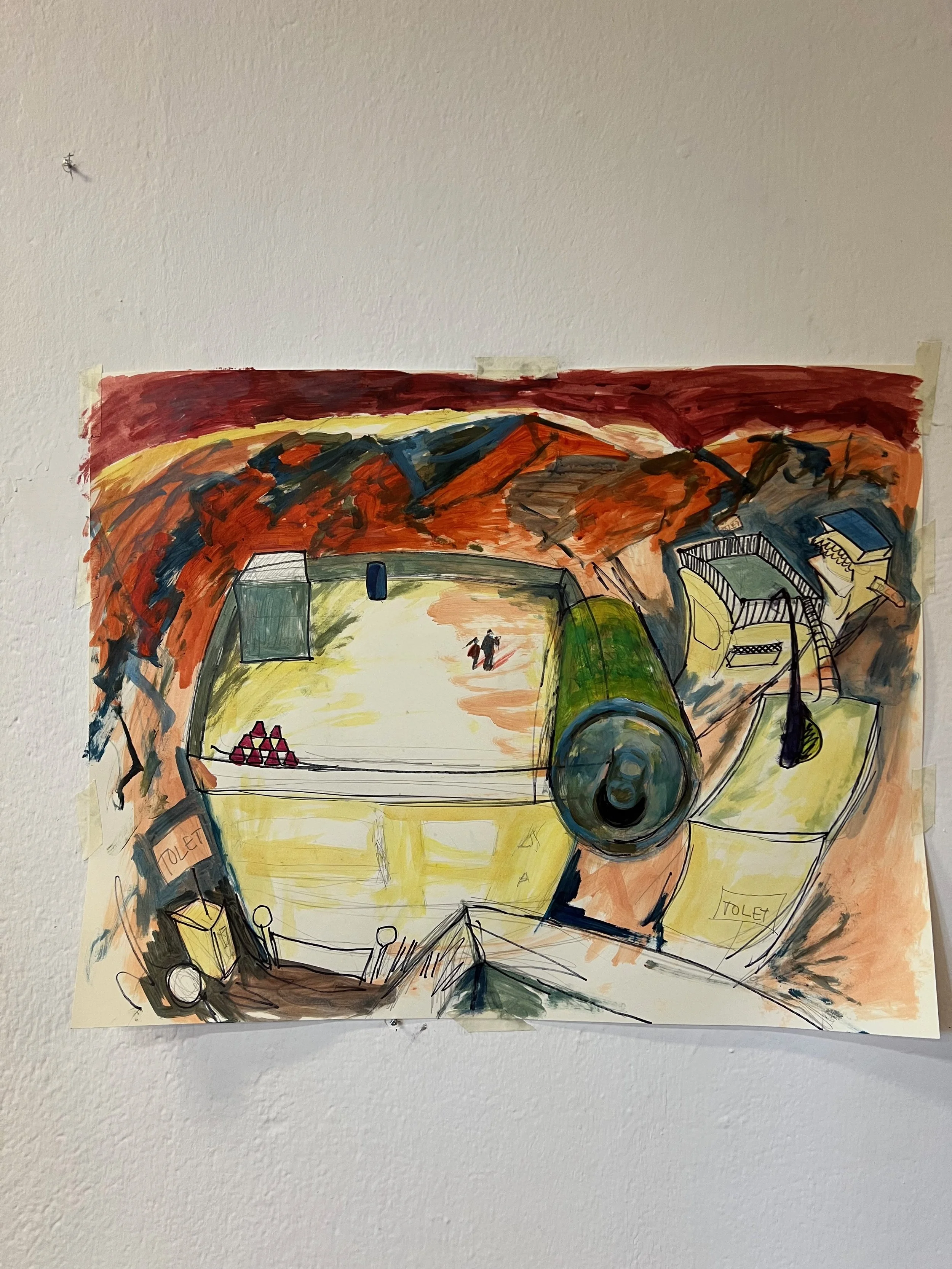
A preliminary drawing of Amama Afghan's future Karachi, where the youth parkour from rooftop to rooftop in search of Pakola.
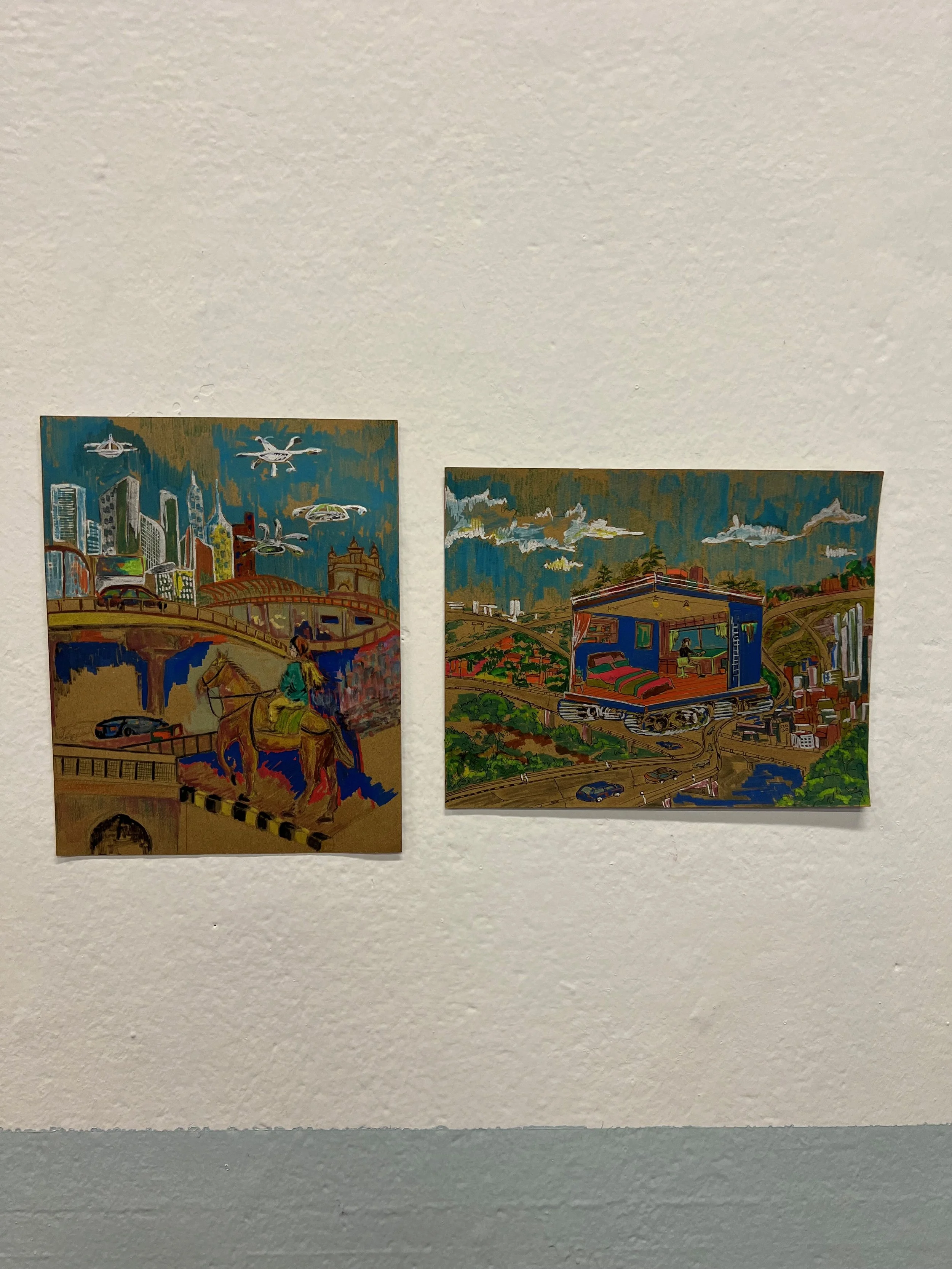
A future architecture best explored on horseback, by Fatima Sohail.
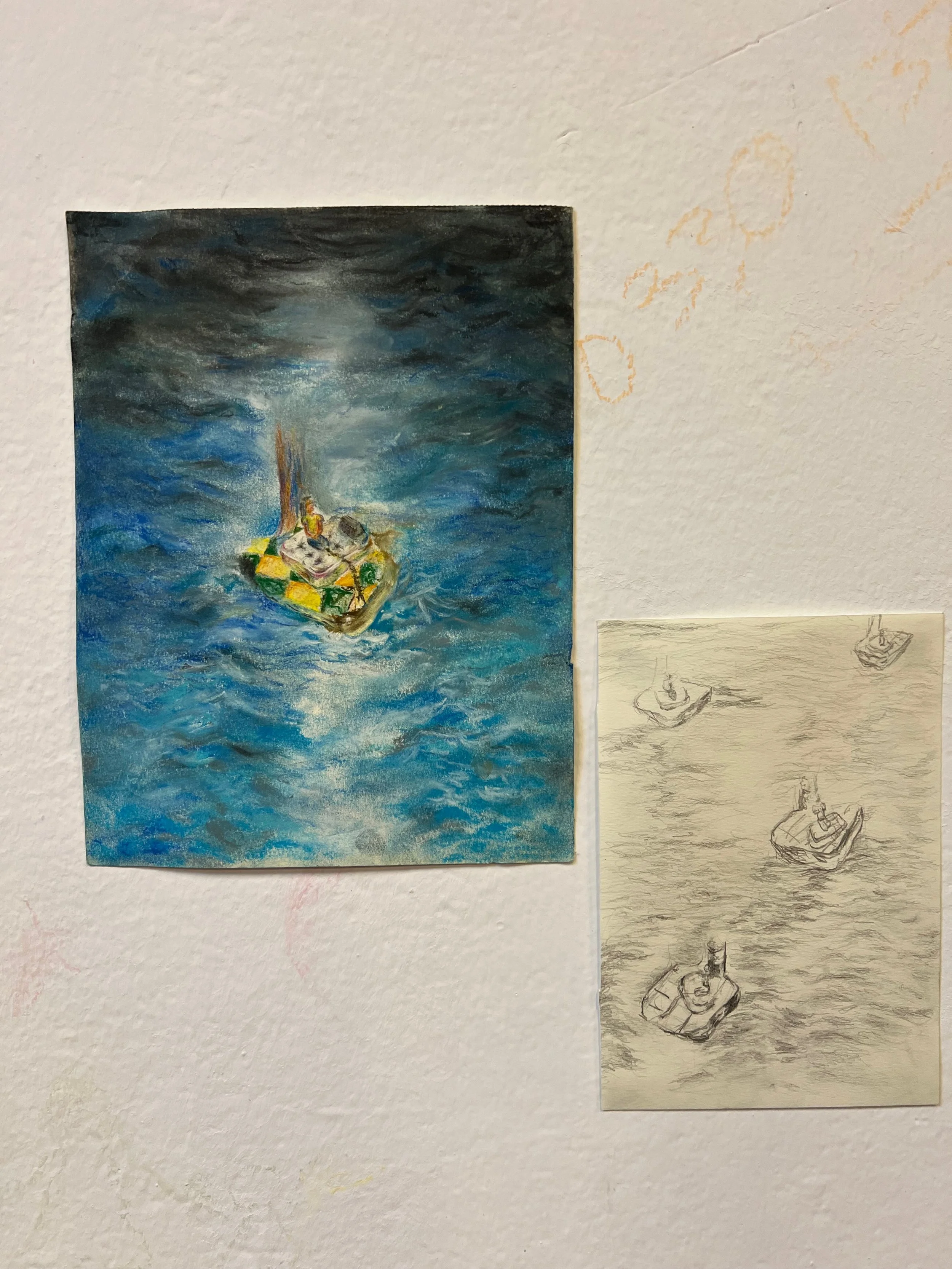
Preliminary studies by Maryum Usmani for a watery world, maybe real or maybe imagined.
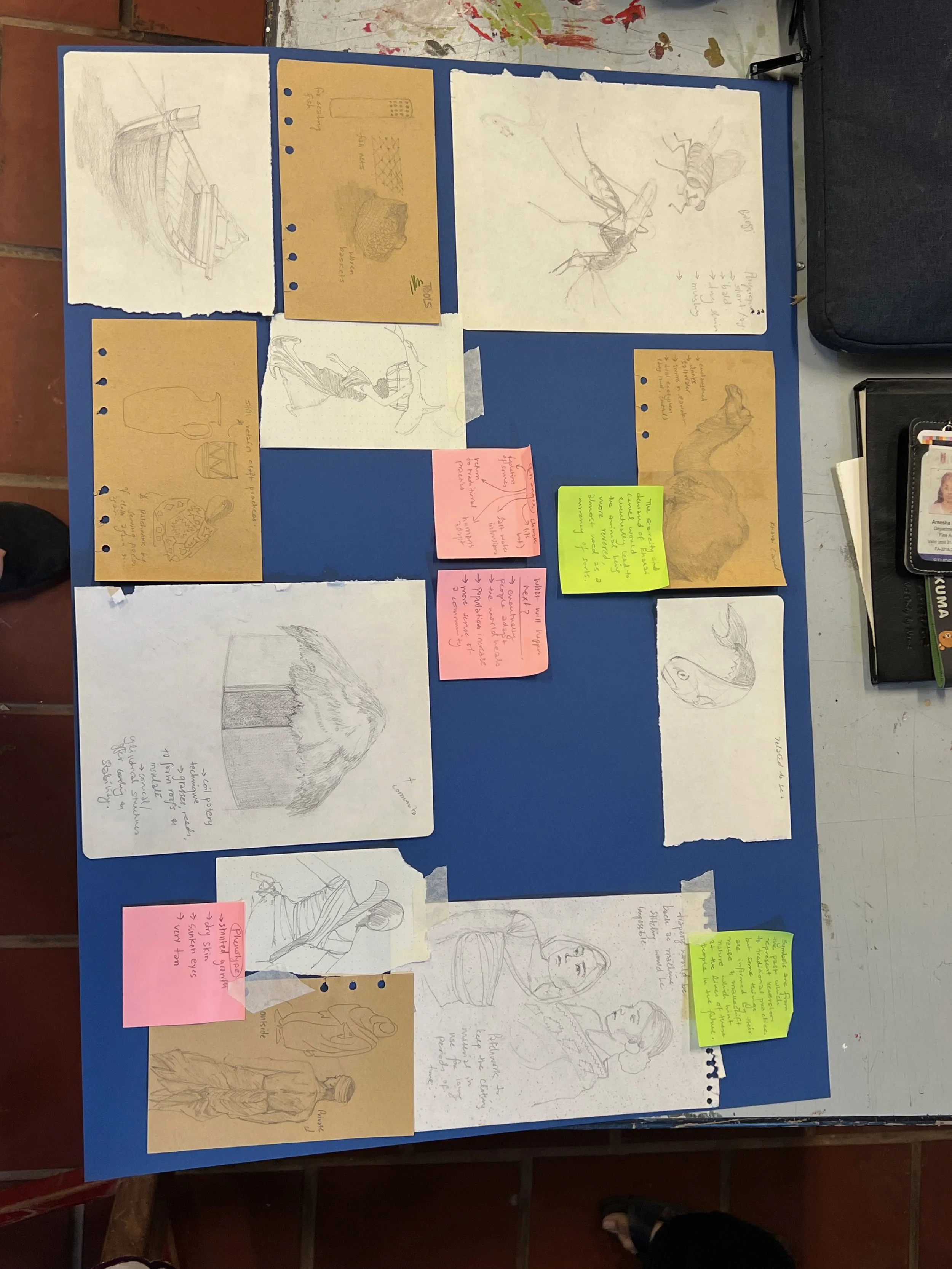
Areesha Shaikh connected the future to the present material lives of Karachi's fishing communities.
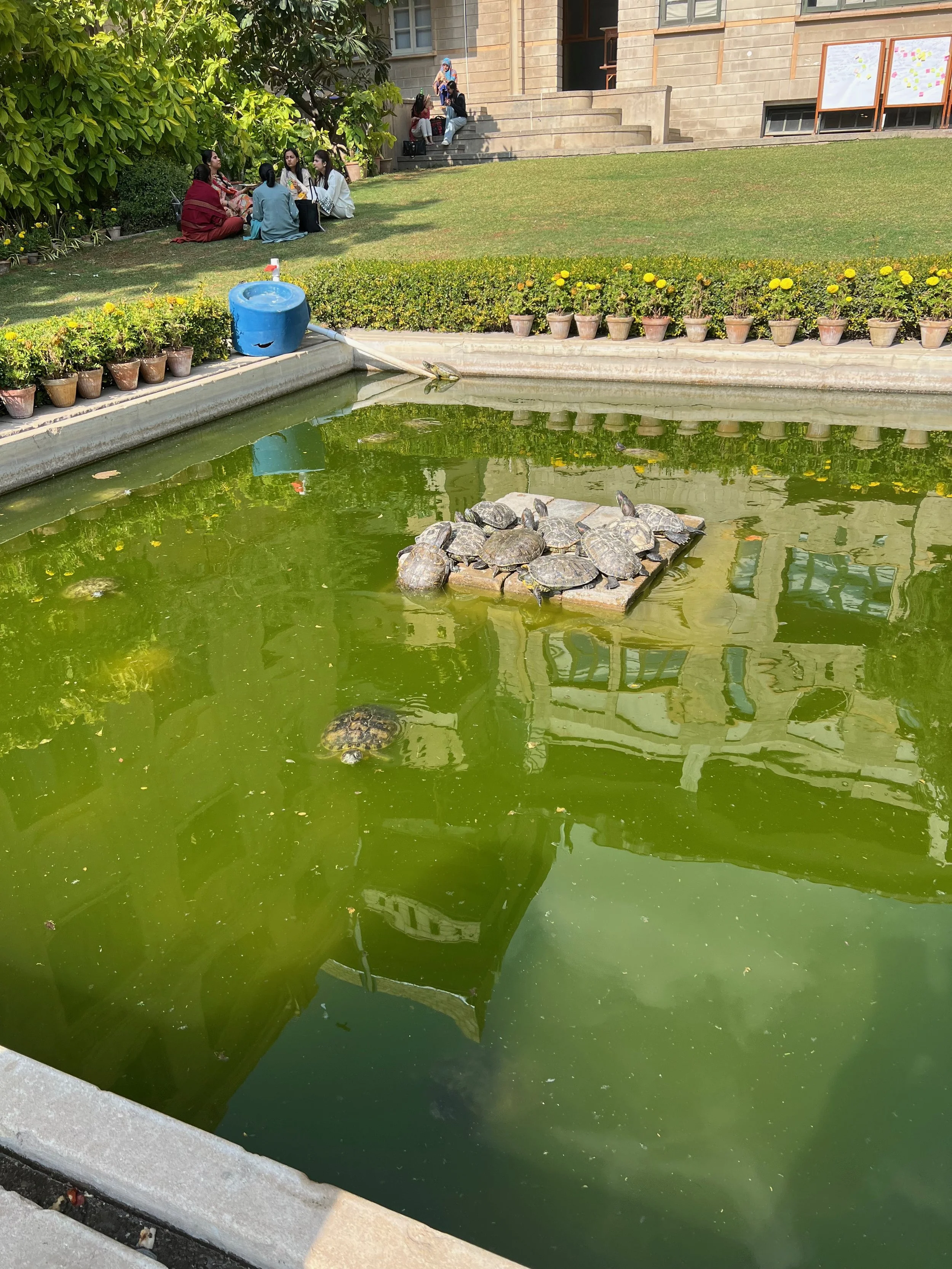
Indus Valley School of Art and Architecture plays host to turtles.
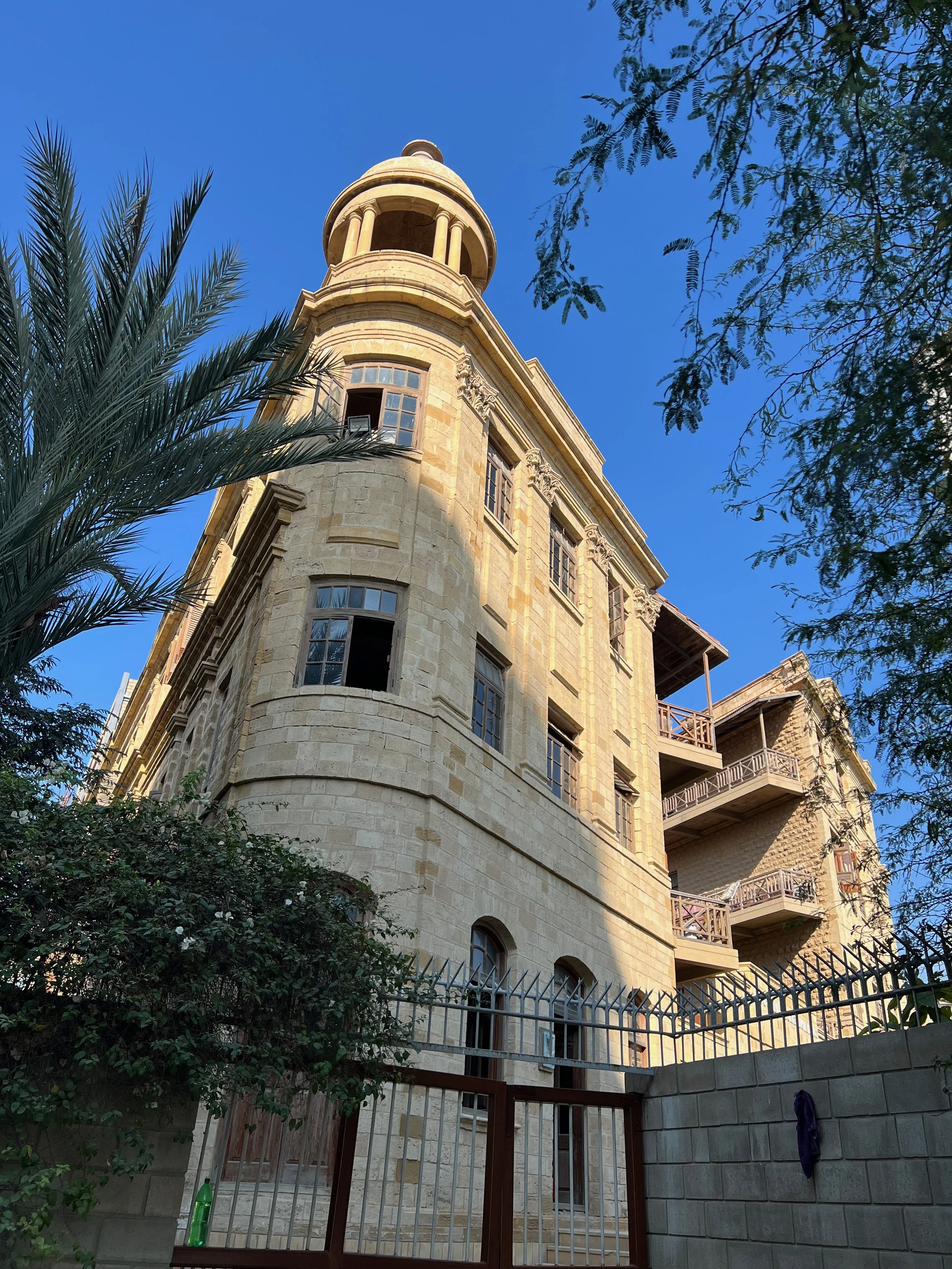
A view of Indus Valley School of Art and Architecture's mail building.
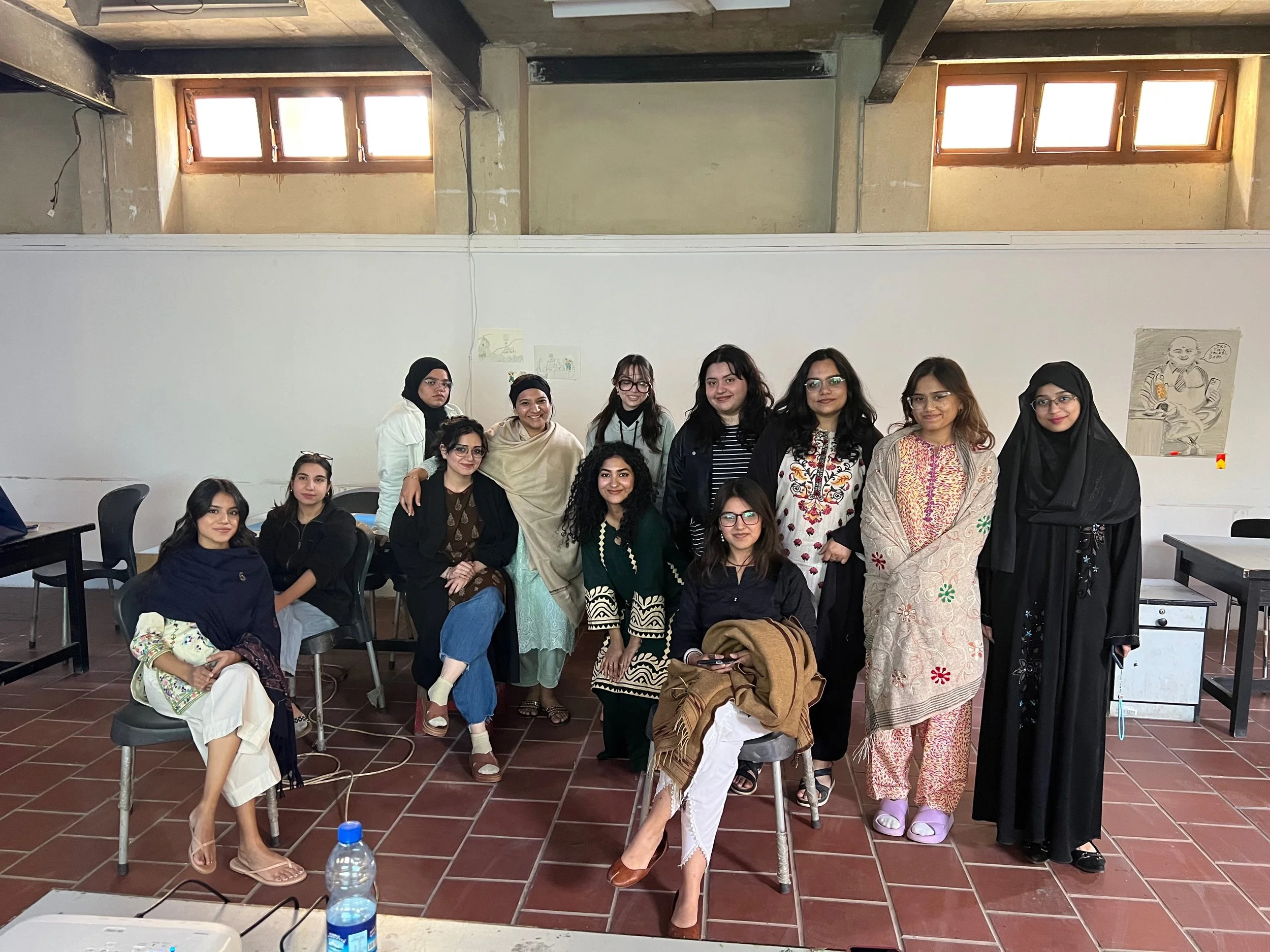
Fourth-year BFA students before the final critique in our Worldbuilding workshop.
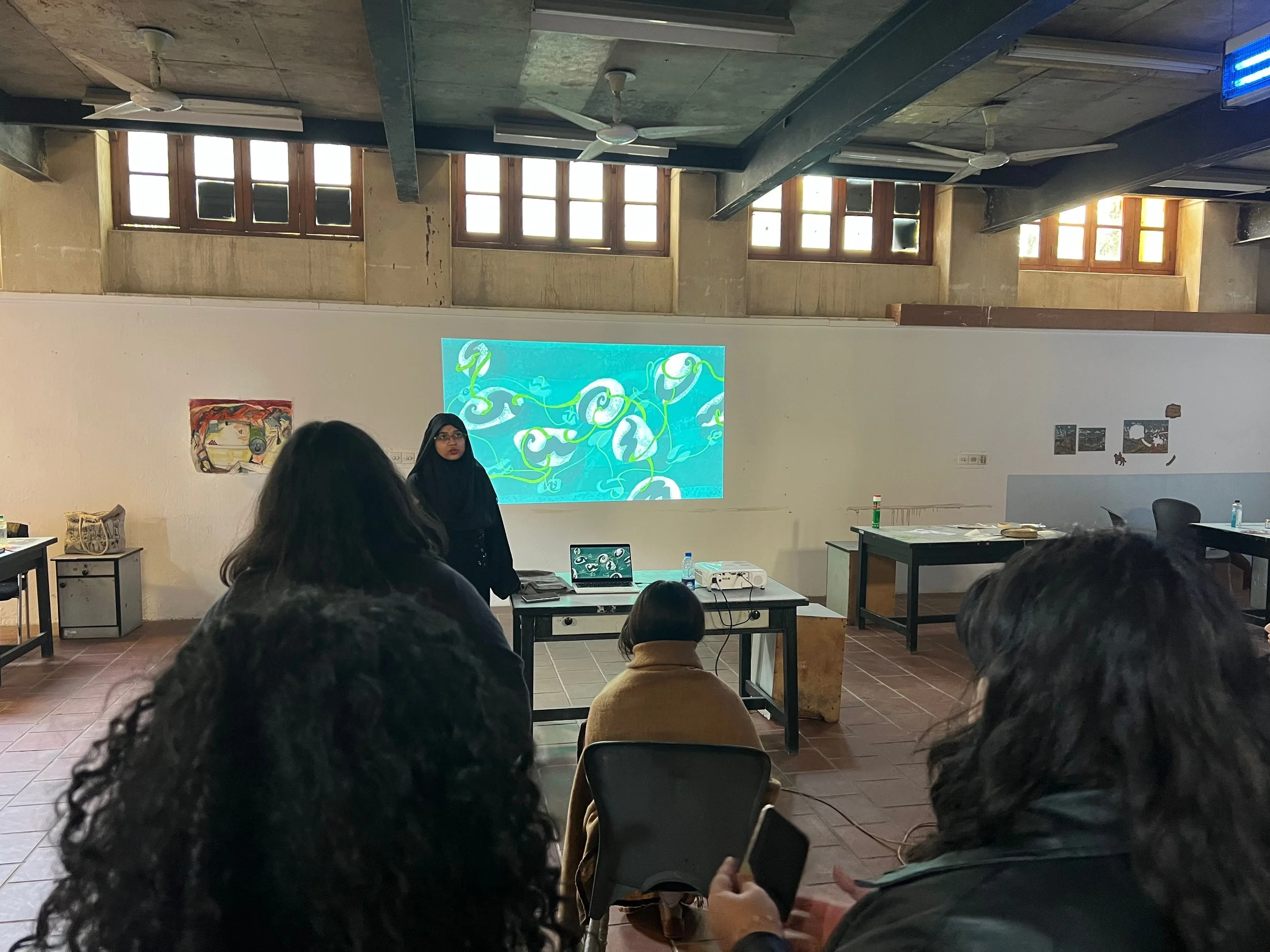
IVS student Afrah Ghous presents her ocean-themed game, asking, what if the world was entirely submerged in water?
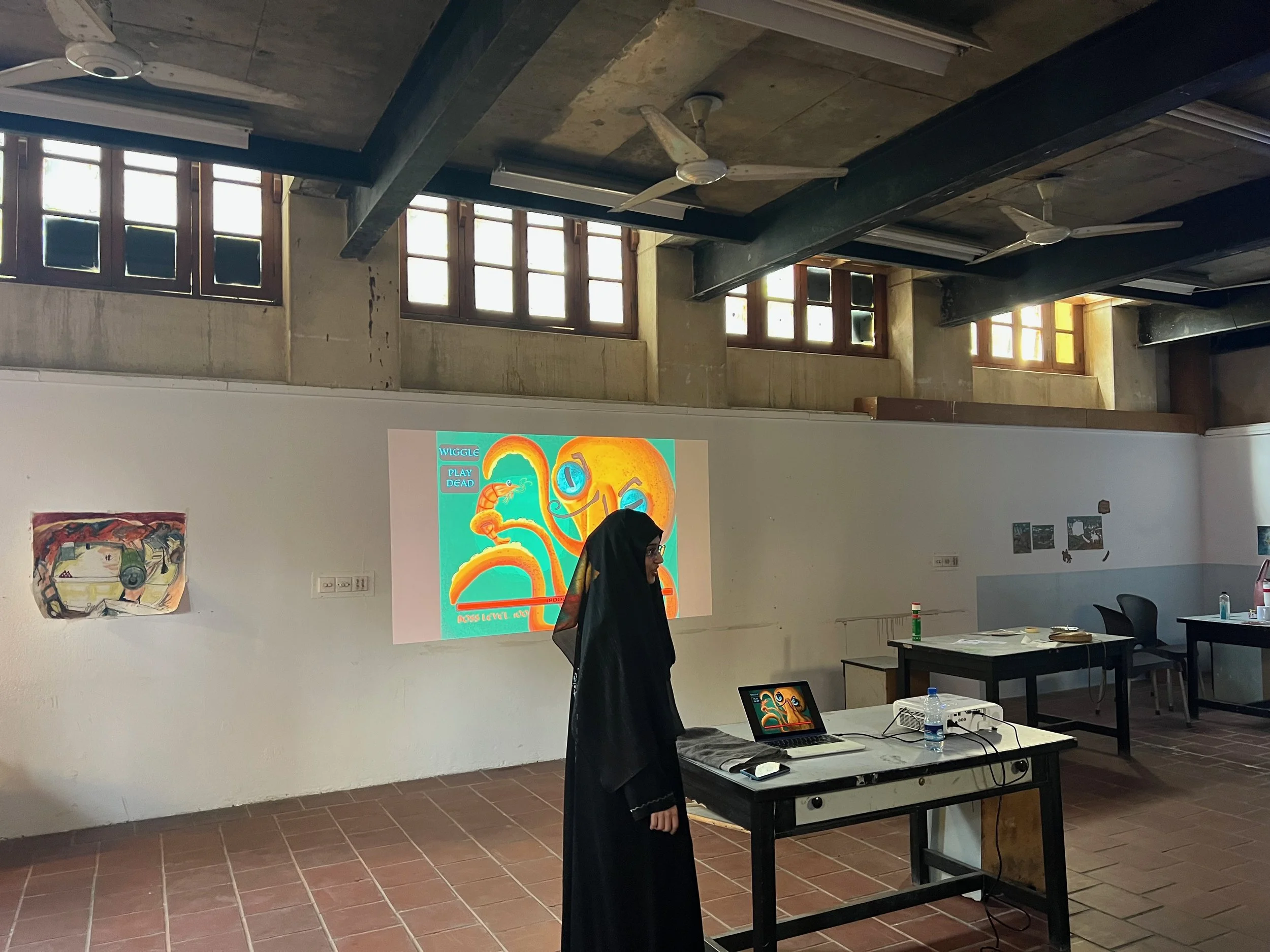
Afrah Ghous's game offers players two choices: wiggle or play dead.
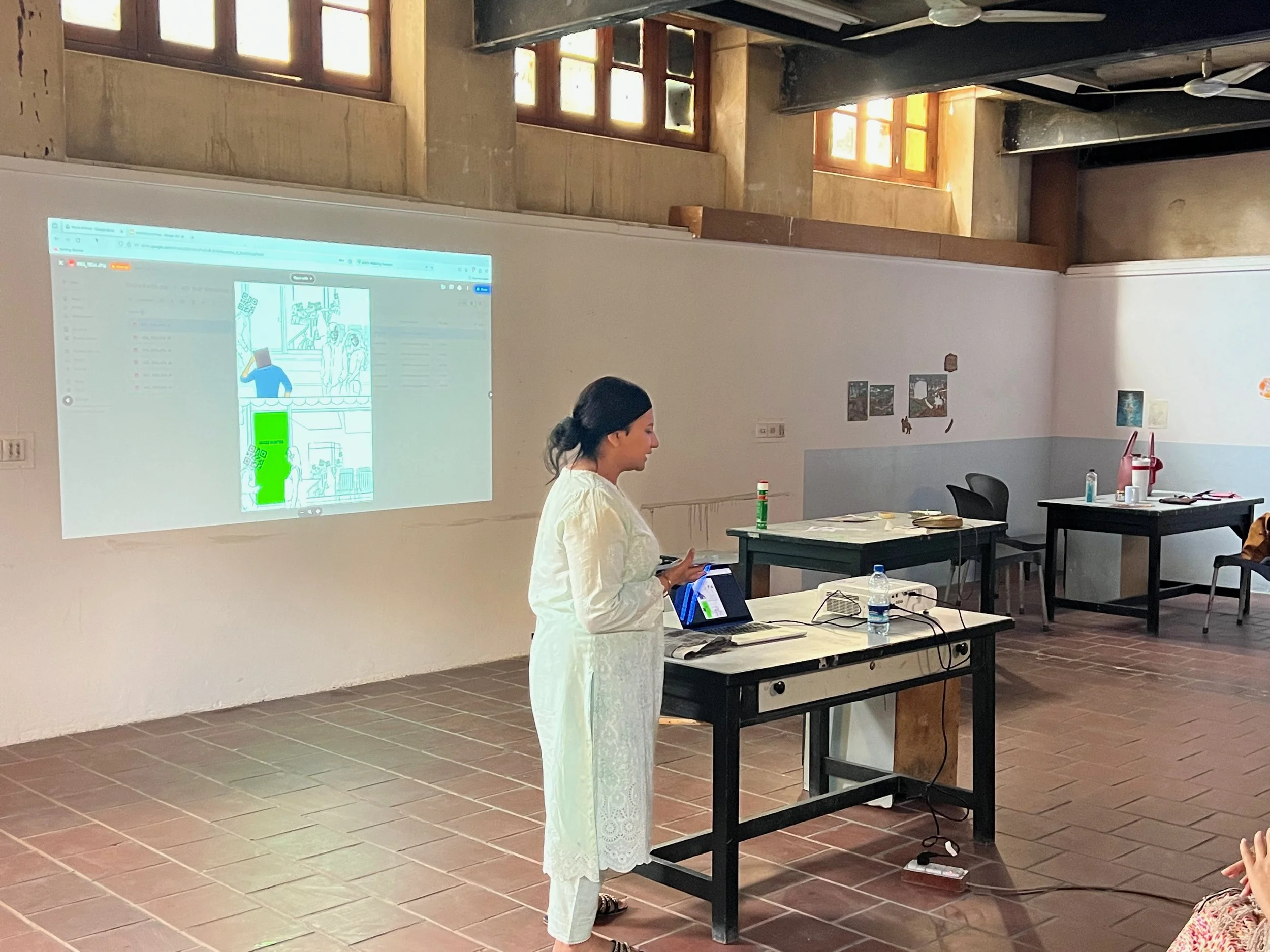
Maria Ahmed Surhwardy presents her vision of a world in which our faces have been replaced by QR codes linking to comprehensive data on our lives. Who would get to keep their data private?
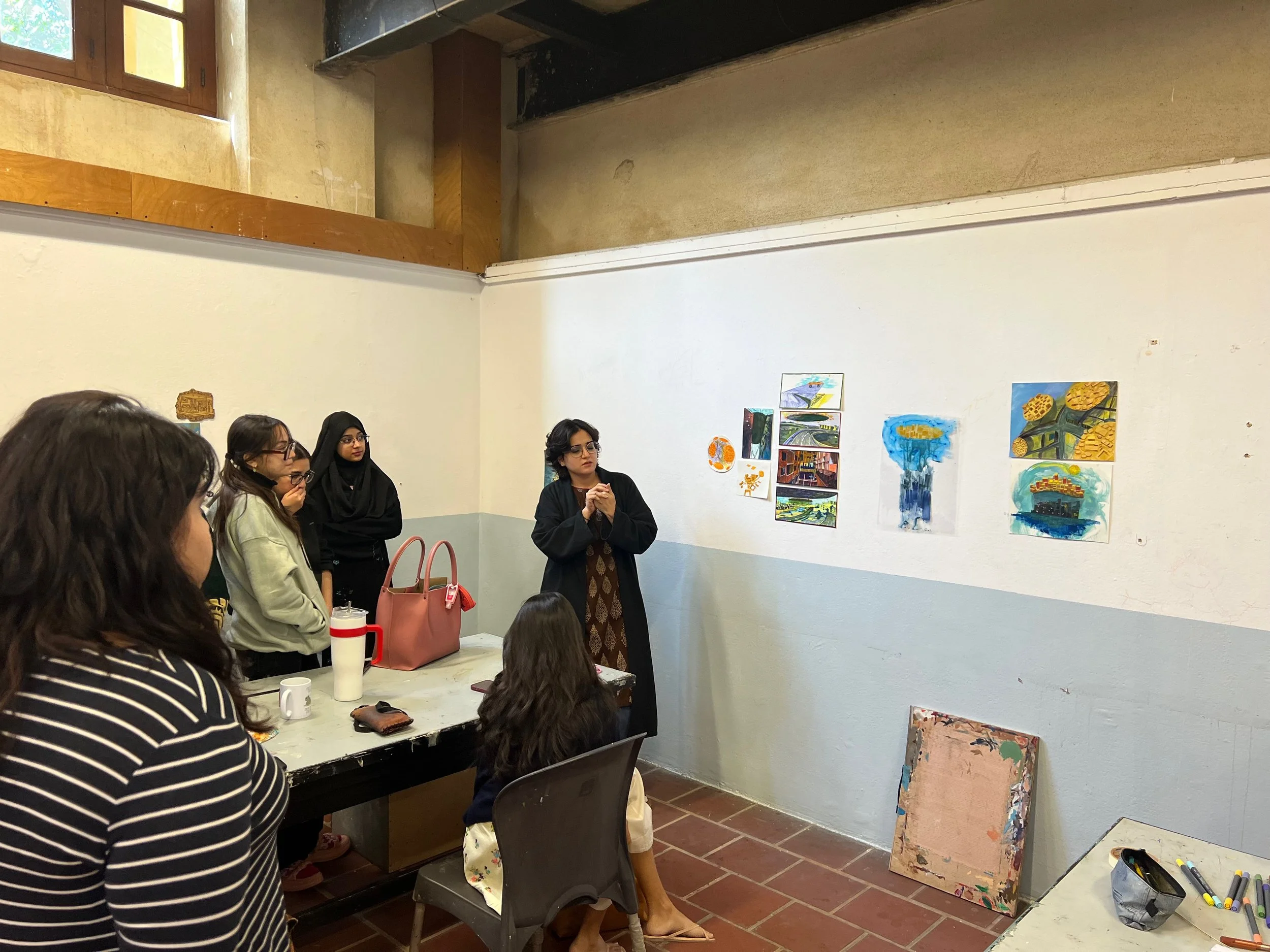
In Hajra Nadeem's future version of Karachi the only clean air is far above the city, where the rich have constructed pod-like homes.
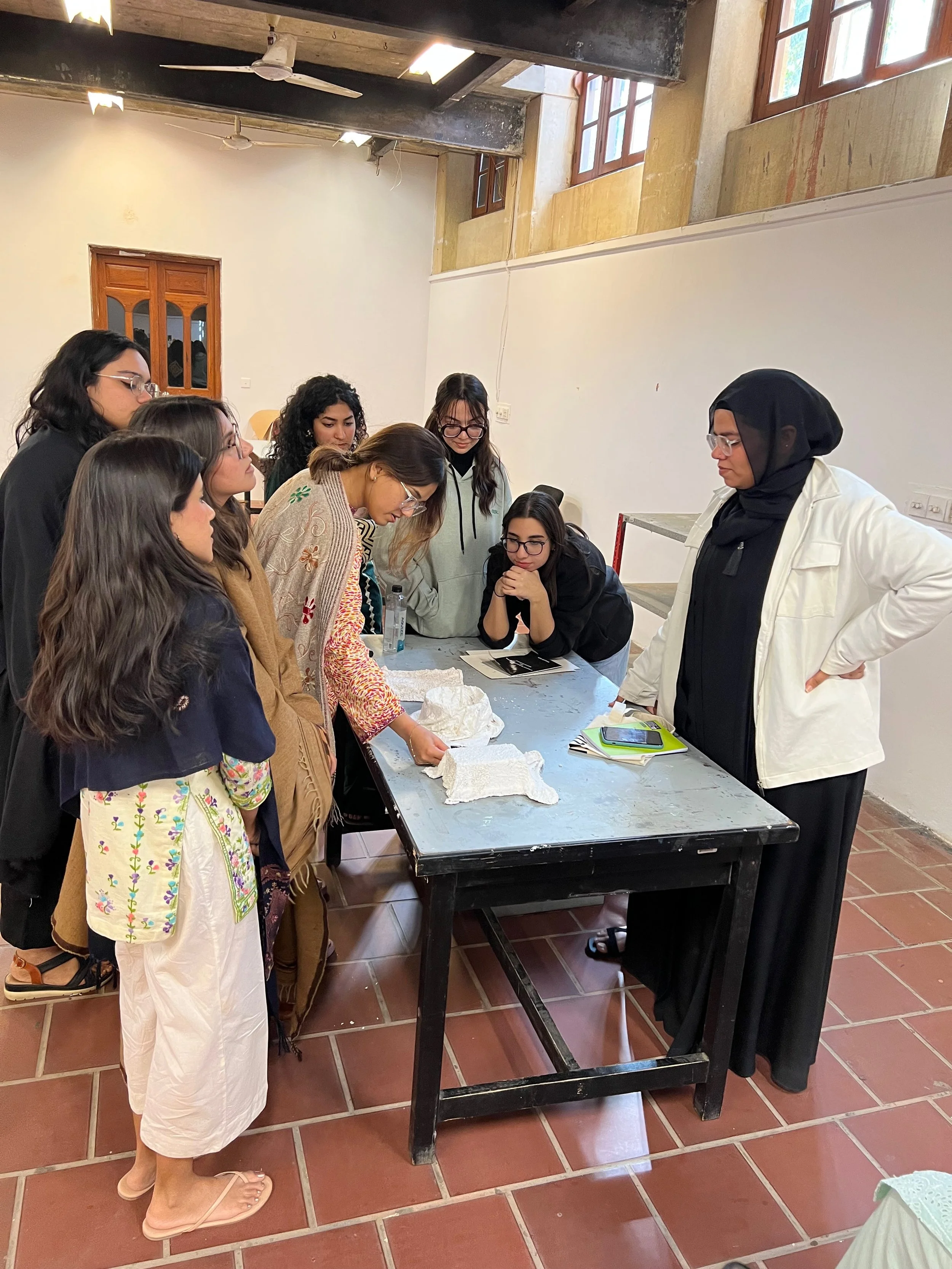
What if a material could absorb the weight of whatever it covered?
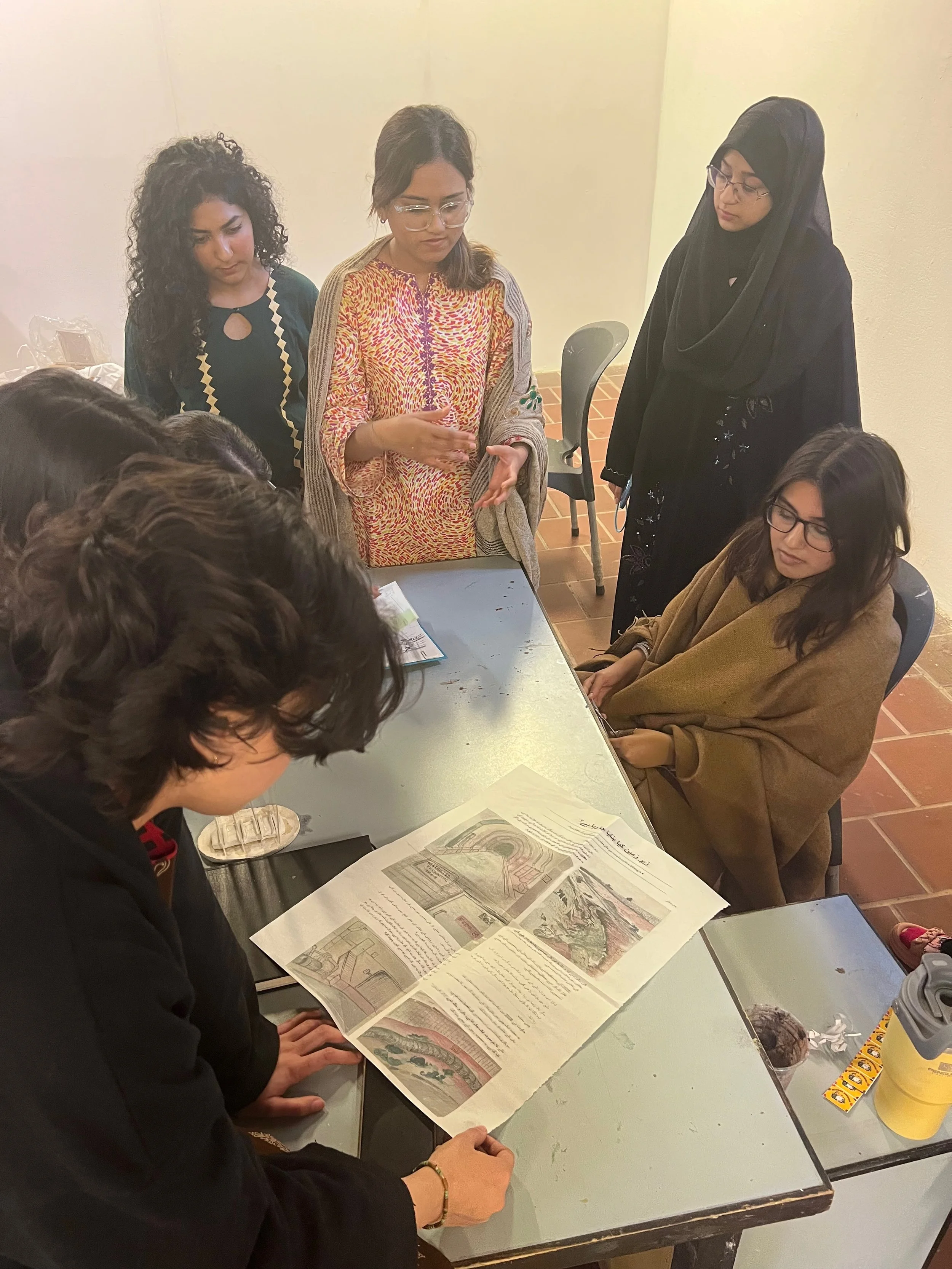
IVS students are encouraged to work with commercial vendors on production, as Eesha Adil did for a newspaper describing her future world.
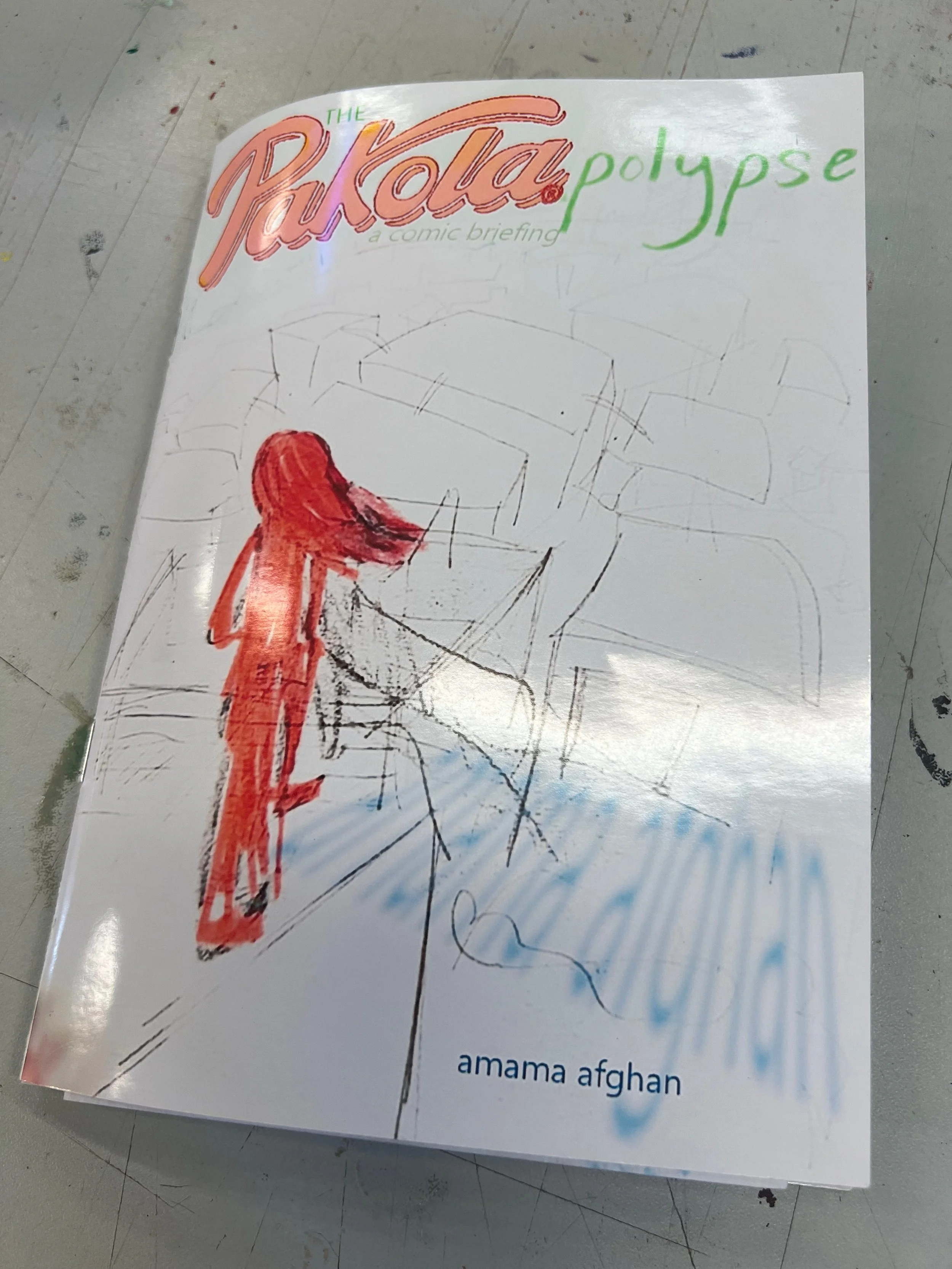
Amama Afghan's final comic book, Pakolapolyspe.